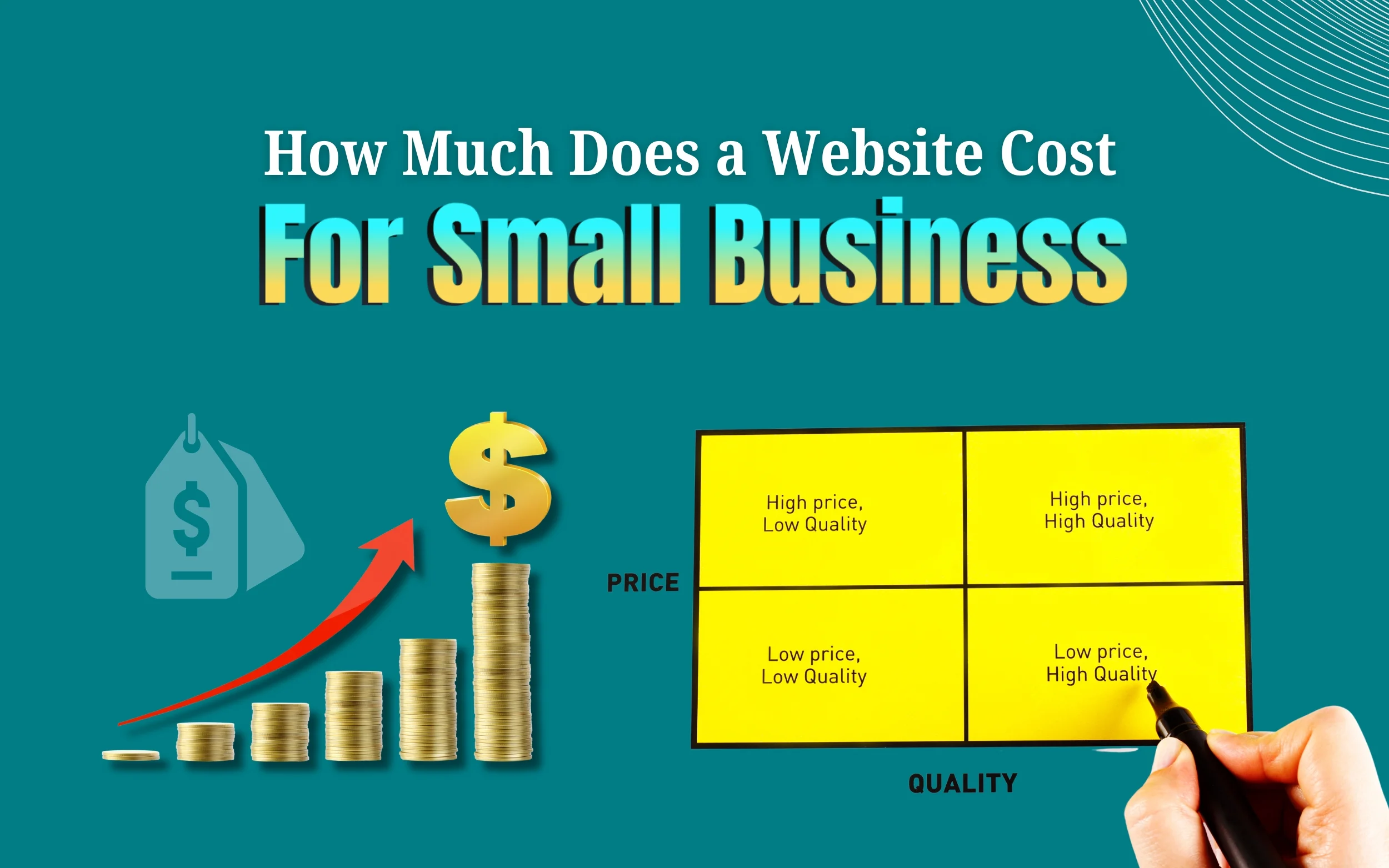
You are about to spend money on a website. But how much should you really pay? A small business website in 2026 can cost anywhere from $200 to $35,000+. The exact price depends on who builds it, how complex it is, and what features you need. The short answer: most small businesses spend between $3,000 and $10,000 for a professional website build, plus $50 to $400 per month in ongoing costs. If you want a simple DIY site, you can get started for as little as $20 to $50 per month.
This guide breaks down how much does a website cost for small business, every option, and every hidden fee. By the end, you will know exactly what to expect and how to get the best value for your budget.
Why Your Small Business Needs a Website in 2026
Think about the last time you heard about a new restaurant or shop. What was the first thing you did? You searched for it online. If there is no website, most people move on. A website is no longer just a nice to have. It is your digital storefront. It is open 24 hours a day, 7 days a week. It builds trust, drives leads, and helps customers find you before they even pick up the phone.
In 2026, your competitors all have websites. Many of them have good ones. If yours is missing or outdated, you are losing business every single day. The good news? A solid, professional website does not have to cost a fortune. You just need to know what you are paying for.
2 Main Ways to Build a Small Business Website
WordPress (Self-Managed)
WordPress powers about 40% of all websites on the internet. It is free to use but requires you to pay for hosting, a domain, and any premium plugins or themes you want. You can build a decent WordPress site for $200 to $500 upfront and around $25 to $75 per month in ongoing costs. But it does take some technical comfort.
Example: A plumber sets up a WordPress site using a premium theme. He adds a booking plugin, a reviews section, and a photo gallery of completed jobs. Total startup cost: around $350.
Best for: Business owners with some tech comfort who want flexibility and control.
Hiring a Professional (Freelancer or Agency)
This is where you hand the project to an expert. A freelancer is a solo designer or developer. An agency is a team with designers, developers, and strategists. Freelancers typically charge $1,500 to $8,000 for a full site build. Agencies start at $6,000 and can reach $35,000 or more for complex projects.
Example: A boutique gym hires a local agency for $8,500. They get a custom design, 10 pages, a class schedule integration, lead capture forms, and basic SEO setup. The result is a site that actually converts visitors into members.
Best for: Established businesses that want a site that generates real leads and revenue.
|
Want a custom website built for your business? Get a FREE audit at and find out what your site should be doing for you. |
How a Website Helps Small Businesses Grow Faster
1. Builds Trust and Credibility
A professional website helps customers see your business as reliable and trustworthy. When people search for your products or services, they often visit your website before making a decision. A modern design, clear information, customer reviews, and easy contact options can create a positive first impression and encourage potential customers to choose your business over competitors.
2. Increases Online Visibility
Most customers start their buying journey online. A website helps your business appear in search engine results when people are looking for related products or services. The more visible your business is online, the more opportunities you have to attract new customers and generate inquiries.
3. Works for Your Business 24/7
Unlike a physical store, your website never closes. Customers can visit your website, learn about your services, submit inquiries, or make purchases at any time. This allows your business to capture leads and opportunities even outside regular working hours.
4. Attracts More Potential Customers
A website makes it easier for people to discover your business. Whether visitors come from search engines, social media, or online ads, your website acts as a central place where they can learn more about what you offer and take the next step.
5. Supports Digital Marketing Efforts
All digital marketing activities work better when supported by a strong website. Whether you’re running SEO campaigns, social media promotions, email marketing, or paid advertising, your website helps convert visitors into customers by providing the information they need.
6. Improves Customer Experience
Customers expect quick access to information. A website can provide service details, pricing information, FAQs, contact forms, and booking options in one place. This makes it easier for customers to find answers and interact with your business.
7. Helps Generate More Leads
A well-designed website can encourage visitors to contact your business through forms, calls, emails, or booking requests. With the right structure and calls-to-action, your website can become a consistent source of new leads.
8. Supports Long-Term Business Growth
As your business grows, your website can grow with it. You can add new services, publish content, launch marketing campaigns, and expand your online presence, making your website a valuable long-term business asset.
What Affects Small Business Website Pricing in 2026?
1. Website Size and Number of Pages
The number of pages required for your website can affect the overall project scope. A simple website with a few pages requires less work than a larger website with multiple service pages, landing pages, and content sections.
2. Design Requirements
Businesses looking for a unique, custom-designed website often require more design work than those using standard layouts. Custom branding, advanced layouts, and tailored user experiences can influence the project’s complexity.
3. Website Features and Functionality
Additional features such as contact forms, appointment booking systems, customer portals, live chat, membership areas, or eCommerce functionality require extra development and testing.
4. Content Creation Needs
Some businesses already have content ready, while others need help with website copy, images, graphics, or videos. Professional content creation can play a significant role in building an effective website.
5. Mobile Responsiveness
Modern websites must work smoothly across smartphones, tablets, laptops, and desktops. Ensuring a seamless experience on all devices requires careful design and development.
6. Search Engine Optimization (SEO)
SEO-friendly websites are structured to help improve visibility on search engines. Technical optimization, keyword-focused content, page speed improvements, and proper website architecture all contribute to website performance.
7. Third-Party Integrations
Many businesses need their website connected to external tools such as CRM systems, email marketing platforms, payment gateways, booking software, or analytics tools. These integrations can increase development requirements.
8. Ongoing Maintenance and Support
A website needs regular updates, security checks, backups, and performance monitoring. Ongoing support helps keep the website secure, functional, and up to date as business needs evolve.
9. Business Goals and Custom Requirements
Every business has different goals. Some need a simple online presence, while others require advanced functionality to support growth. The level of customization and specific business requirements can significantly impact the website development process.
10. Developer Experience and Service Quality
The expertise of the website development team can influence the quality of the final product. Experienced professionals focus on performance, user experience, security, scalability, and long-term success, helping businesses get better results from their website.
Breaking Down Every Website Cost Component
No matter how you build your site, there are a few core costs you will always face. Here is what each one means and what it should cost.
1. Domain Name
Your domain is your website address, like yourbusiness.com. You rent it annually. A standard .com domain costs $10 to $20 per year at registrars like GoDaddy or Namecheap.
2. Web Hosting
Hosting is the digital space where your website files live. No hosting means no live website.
|
Hosting Type |
Monthly Cost | Best For |
|
Shared Hosting |
$2 – $15/month | New or low-traffic sites |
|
Managed WordPress Hosting |
$25 – $60/month | WordPress sites needing support |
|
VPS Hosting |
$40 – $120/month |
Growing sites with more traffic |
|
Dedicated Hosting |
$150+/month |
High-traffic or large e-commerce |
3. SSL Certificate
SSL is the padlock icon in your browser. It encrypts data and helps your site rank on Google. Basic SSL is free through most hosts. Paid options cost $8 to $300 per year.
4. Website Design and Development
This is usually the biggest cost. Prices vary based on who does the work:
- Freelance designer: $1,500 to $8,000
- Boutique agency: $6,000 to $12,000
- Full-service agency: $15,000 to $35,000+
5. SEO (Search Engine Optimization)
SEO helps your website show up on Google. Basic on-page SEO can be built into the site during development. Ongoing monthly SEO services run $300 to $2,000+ per month.
6. Website Maintenance
Once your site is live, it needs regular care. Updates, backups, and security scans keep it running properly.
- Professional maintenance plans: $50 to $500 per month
- Freelancer hourly rate: $35 to $150 per hour

How Much Does a Small Business Website Cost at GrewDev? Quick Overview
Before we go deep, here is a simple snapshot of website costs in 2026. Below are three website packages, each designed for a specific stage of business growth.
|
Business Stage |
One-Time Investment | Monthly Growth Care Plan |
|
Starter Growth Website |
$1,497 |
$99/month |
|
Growth Engine Website (Most Popular) |
$3,997 |
$199/month |
| Authority & Scale Package | $6,997+ |
$349/month |
Optional Add-Ons
|
Add-On Service |
Price |
|
Additional Landing Pages |
$297 each |
|
Advanced SEO Package |
$497/month |
| AI Automation Setup |
Starting at $499 |
| Ongoing Funnel Management |
$397/month |
| Paid Ads Management |
Custom Pricing |
Click here to see full details.
Hidden Website Costs Most Business Owners Miss
Here are the costs that catch many business owners off guard. Plan for these before you start.
Plugin and App Subscriptions
Many website features run on plugins or apps. Each one comes with its own annual or monthly fee. A contact form plugin, a booking tool, a chat widget, an SEO tool… these stack up fast. Some businesses end up paying $100 to $500 per year on plugins alone.
Platform Migration Costs
Switching from one website platform to another is expensive. Moving a full site can cost $700 to $6,000 depending on the size and complexity. Start on the right platform to avoid this.
Content Updates
Your business changes. So should your website. If you cannot update it yourself, you will pay a developer $50 to $150 per hour every time you need to change your prices, hours, or services.
Performance and Speed Optimization
A slow website loses visitors. Google also penalizes slow sites in search rankings. Speed optimization is often a separate service that costs $200 to $1,000 as a one-time fix.
DIY vs Freelancer vs Agency: Which Is Right for You?
|
Factor |
DIY Builder | Freelancer |
Agency |
|
Upfront Cost |
Low ($0 – $500) | Medium ($1,500 – $8K) | High ($6K – $35K+) |
|
Ongoing Cost |
$20 – $50/month | $50 – $200/month | $100 – $800/month |
|
Time Required |
High (you do it all) | Low – Medium | Low (they handle it) |
| Design Quality | Template-limited | Custom but varies |
Professional grade |
| SEO Setup | Basic only | Depends on freelancer |
Usually included |
| Best For | Startups, simple sites | Mid-budget, custom look |
Growth-focused businesses |
A common mistake is choosing the cheapest option now and then paying twice later for a rebuild. Think about where your business will be in 2 years and build for that.
Red Flags to Watch Out for When Hiring a Web Designer
- A $200 or $300 ‘professional’ website: Likely a generic template with almost no customization
- No written contract or project scope: This leads to misaligned expectations and extra charges
- ‘Free website, just pay hosting’: These offers often lock you into a platform you cannot leave
- Charging for a ‘proprietary platform’: Any serious developer should use industry-standard tools
- No examples of past work: If they cannot show you what they have built, be cautious
- No post-launch support plan: Your site will need maintenance; make sure someone is there
Real-World Website Cost Examples for Different Business Types
|
Business Type |
Pages Needed | Typical Build Cost |
|
Local Service (plumber, cleaner) |
5 – 7 pages | $2,000 – $5,000 |
|
Restaurant or Cafe |
6 – 8 pages | $2,500 – $6,000 |
| Consultant or Coach | 5 – 8 pages |
$3,000 – $7,000 |
| Retail / Online Shop (20 products) | 10+ pages |
$4,000 – $10,000 |
| E-Commerce (100+ products) | 15+ pages |
$10,000 – $35,000+ |
How to Get the Most From Your Website Budget
Start With a Clear Goal
Before spending a single dollar, know what you want your website to do. Generate phone calls? Sell products? Book appointments? A clear goal helps you prioritize features and avoid paying for things you do not need.
Write Your Own Content First
Content is often a big hidden cost. If you write your own page copy before the build starts, you save money and speed up the project.
Ask for a Flat Project Fee
Hourly billing can get out of control. Ask for a flat fee with a clear scope of work. Include a list of revisions and exactly what is covered after launch.
Invest in SEO From Day One
A beautiful website that no one can find is a waste of money. Make sure your developer includes basic on-page SEO. Even a small investment in SEO services upfront saves you money later.
Plan for Maintenance
Build maintenance into your monthly budget from day one. Even $50 to $100 per month for a basic maintenance plan keeps your site healthy, secure, and performing well.
|
Ready to build a website that actually grows your business? Get your FREE Business Growth Audit |
What Does a Good Small Business Website Include?
- Custom responsive design (looks great on mobile and desktop)
- Home, About, Services, Contact, and Blog pages as a minimum
- On-page SEO setup (title tags, meta descriptions, structured data)
- Fast loading speed (under 3 seconds)
- SSL certificate and basic security setup
- Contact form and click-to-call button
- Google Analytics and Google Search Console integration
- Basic training so you can update the site yourself
2026 Website Cost Summary: What Should You Budget?
|
Business Stage |
Recommended Option | Budget Range |
|
Just starting out |
DIY builder or Starter Growth Website | $500/year or $1,497 one-time |
|
1 – 2 years in business |
Growth Engine Website |
$3,997 one-time + $199/month |
| Established, want to grow | Authority & Scale Package |
$6,997+ one-time + $349/month |
| Scaling or e-commerce | Authority & Scale + Add-Ons |
Custom pricing available |
Why Choose GrewDev for Your Small Business Website?
At GrewDev, we understand that every small business has different goals and budgets. That’s why we focus on creating websites that are not only professional and modern but also designed to help your business grow. Our team works closely with you to understand your needs and build a website that matches your brand, attracts customers, and creates a great user experience.
When you work with GrewDev, you get more than just a website. We provide expert guidance, responsive custom UI/UX design, SEO-friendly development, and ongoing support to help your business succeed online. Whether you need a brand-new website or want to improve an existing one, we make the process simple, transparent, and stress-free, so you can focus on running your business while we handle the technical work.
Conclusion
A website is one of the best investments you can make for your small business. It works for you around the clock, builds credibility, and brings in new customers without you having to lift a finger. The key is knowing what you need, finding the right partner to build it, and planning for the ongoing costs so there are no surprises.
In 2026, a professional, conversion-focused small business website typically costs between $3,000 and $10,000 to build and $50 to $400 per month to maintain. Our packages are designed to make that decision simple and transparent. Start where you are. Build what you need. Grow from there.
|
Claim Your FREE Business Growth Audit Today |
FAQ:
1. What factors determine the cost of a small business website?
The cost of a website depends on factors such as design complexity, number of pages, required features, content creation, SEO requirements, and ongoing maintenance needs.
2. Why do website prices vary so much between providers?
Different providers offer different levels of expertise, customization, support, and strategy. A basic template website and a custom-built business website serve very different purposes.
3. Is a custom website better than a template-based website?
A custom website offers greater flexibility, branding opportunities, scalability, and conversion-focused design, while template-based websites are often quicker to launch but may have limitations.
4. What features should a small business website include?
A professional small business website should include responsive design, clear calls-to-action, contact forms, fast loading speeds, SEO foundations, and security features.
5. Do small businesses need a mobile-friendly website?
Yes. Most users browse websites on mobile devices, making responsive design essential for user experience, search rankings, and lead generation.
6. Is SEO important when building a new website?
Absolutely. SEO helps potential customers find your business online and ensures your website is structured for long-term visibility in search engines.
7. What ongoing services does a website need after launch?
Most websites require regular updates, security monitoring, backups, performance optimization, and technical support to stay secure and effective.
8. How long does it take to build a small business website?
The timeline depends on the project’s size, content requirements, custom functionality, and approval process. More complex websites typically require additional planning and development time.
9. Can a website help generate more leads and sales?
A well-designed website can improve credibility, enhance user experience, and encourage visitors to take action, helping businesses attract more leads and customers.
10. How can I choose the right website package for my business?
Start by defining your goals, target audience, required features, and future growth plans. The right solution should support both your current needs and long-term business objectives.
11. Is investing in a professional website worth it for small businesses?
A professional website can strengthen your online presence, build trust with potential customers, and create more opportunities for business growth in an increasingly digital marketplace.